
Jen SmithSouth West health correspondent
Paramedics have praised an ambulance service’s mental health support service – with some saying it had kept them in the job.
The South Western Ambulance Service Foundation Trust (SWASFT) – which has more than 6,000 employees and 650 volunteers – said demand for mental health support among its staff was at record levels.
It said more than 1,600 staff members had accessed support in the last year from its Staying Well initiative.
Lauren Dunn, the trust’s mental health lead, said emergency responders were more likely to be diagnosed with a mental health condition than the general population.
Bosses at the trust said demand for its Staying Well service had grown since it was launched 10 years ago, with support evolving to include an in-house trauma therapist.
Ms Dunn said: “We know one in four people are diagnosed with a mental health condition every year, and we know in blue light services that that is higher.”
She said the Staying Well service was created “to make sure we are there in those moments of need”.


Emergency medical dispatcher Toria Ford said one of the hardest things was not always knowing the outcome of her work.
“I’m the call-taker who answers the phone once you call 999 and ask for an ambulance” she said.
“The crews then arrive and we move onto the next call.”
Ms Ford said the trauma she experienced on a daily basis could be hard to deal with.
“The difficulties that other people go through, what people are experiencing maybe once or twice in their life, to make them call 999,” she said.
“You then come into the job and experience that five, six, seven times a day.
“You’re dealing with those really critical emergency moments much more than other people, and I really struggled with that.”
Ms Ford was put in touch with the Staying Well service and received counselling as part of her therapy.
“I think just reaching out and being able to get the support was really, really beneficial,” she said.
“It’s definitely helped, it’s kept me in the job.”
Paramedic Mylena Wheaton, who has been with the ambulance service for 17 years, said she had seen everything from babies being born to major incidents with multiple fatalities.
“I don’t think I was fully prepared for the emotions that go alongside the jobs that we go to,” she said.
Ms Wheaton asked for support from the trust’s Staying Well service in November 2024.
She added: “I realised that when I went to a job that was quite a normal job, and I wasn’t coping very well with it, that’s when I realised that I knew I needed help.”
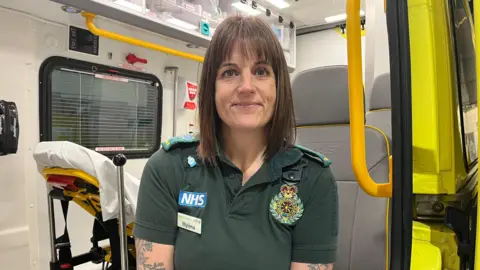
Ms Wheaton said she had become increasingly anxious, worried about her performance at work and lacking in confidence.
She added: “I’m so glad that I reached out – I honestly don’t think I would be here if I hadn’t have reached out and spoken to somebody at that time.
“We see so much, and to us it becomes normal, but it’s not normal.
“To be there at somebody’s you know, sort of last moment – it can be a hugely traumatic event, and sometimes we just brush it under the carpet.”


