
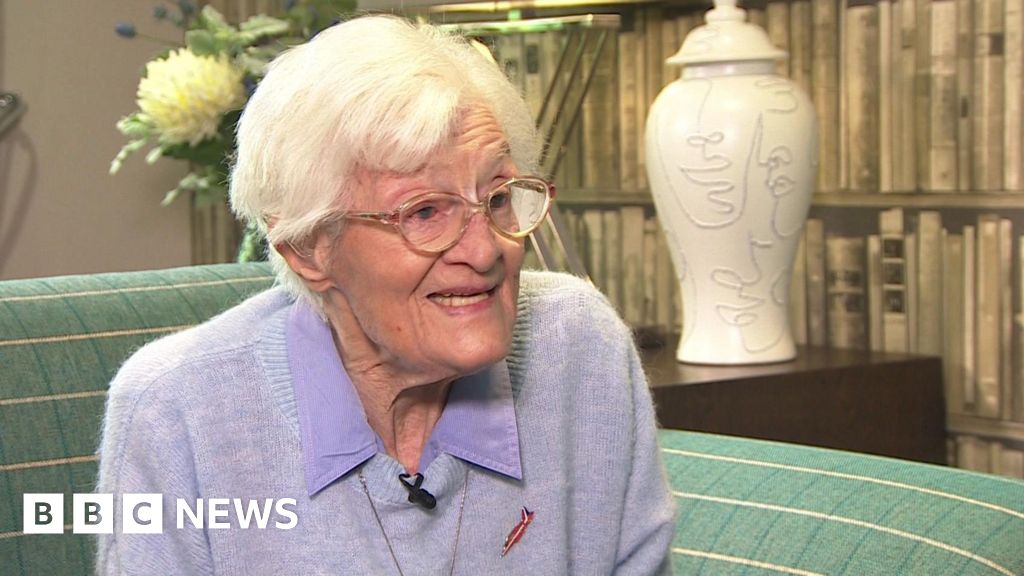
A 99-year-old-women has been remembering how she and thousands like her went to work on farms to help feed the nation during World War Two.
Gwen Raggett left her job in a Bournemouth cinema to join the Women’s Land Army (WLA) – known as the “land girls” – replacing male workers who had joined the military and helping to keep farms running and producing food.
Her family have compiled a scrapbook of her pictures, letters and newspaper clippings to preserve her remarkable memories of the time.
Gwen said she was “doing my bit” during her six years in the WLA.
About 200,000 women went to work on farms as so-called land girls during World War Two.
With many ships carrying food imports being sunk by German U-boats, boosting home-grown food production was vital to the war effort.
Aged 17, Gwen was sent to work on a farm near Andover in Hampshire, carrying out “back-breaking” tasks including potato picking as well as learning how to thatch roofs and drive a three-ton lorry.
Along with about 100 other land girls, she was accommodated at Redenham House and recalled that, alongside the hard work, there was plenty of fun.
“It was a lovely life. I’m very lucky because I enjoyed the outdoor life.
“We all mixed very well indeed. We were all great friends,” she added.
Her scrapbook was put together after she showed her daughter-in-law, Heather Raggett, her remarkable collection of photos and other artefacts.
Heather recalled Gwen having “a carrier bag full of photographs, documents and letters”
“When I saw all this material, I was amazed by what Gwen had kept.
“I felt we’ve got to preserve this in some way. Not only does it tell the history of the Land Army, it tells it through Gwen’s eyes.
“Without them – where would the food have come from.”
Gwen remained in the WLA until 1949. The organisation was finally disbanded the following year.
The land girls returned to their homes at the end of their service, but there was little official recognition for what the WLA and the had done.
Eventually they were awarded a special commemorative badge in 2007.
“It was a long time, but it was nice when it came.”
“I didn’t do these things to get something, I just wanted to do my bit, and I did, she added”.

