

 Craig Russell
Millions of pounds of funding could change the outcome for patients with brain tumours, according to scientists in Devon.
The University of Plymouth has been awarded £2.8m to develop its research, which experts and patients said could result in life-changing treatments.
The funding has come from the charity Brain Tumour Research and will be used to repurpose existing drugs and move more quickly towards clinical trials.
Brain tumour patients such as Glenn Lilley from Plymouth said the funding could be “a game-changer”.
Warning: Graphic images of post-surgery patients and their wounds below
Surgeons at Derriford Hospital in Plymouth had to create a new skull for Craig Russell, whose own had become so deformed by a brain tumour it could not be saved.
The actor from Falmouth had struggled through months of strange behaviour, before tests revealed a tumour had been growing in his brain for the past 15 years.
Mr Russell, whose tumour was discovered in 2023, said: “It was huge.
“I experienced everything from forgetting people I’d already met, to getting lost in my own home.
“I had constant pain in the back of my head, I lost the vision in one eye, and my hearing had gone.
“Towards the end I did not know what was going on.”

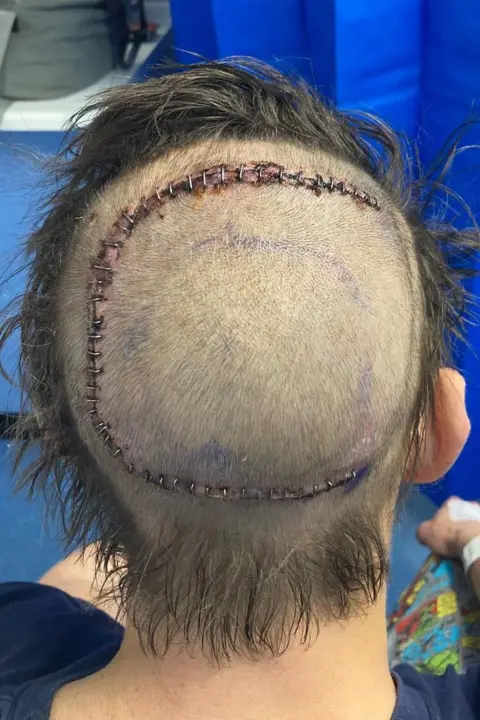 Craig Russell
Mr Russell is one of 13,000 people who are diagnosed with a brain tumour every year in the UK, according to Brain Tumour Research.
His tumour was described as low grade – a term generally used to mean benign by the NHS.
“Low grade doesn’t suggest anything at all what it was like having been through it,” Mr Russell said.
“My life has been changed forever – they had to remove my skull to get to the tumour.”
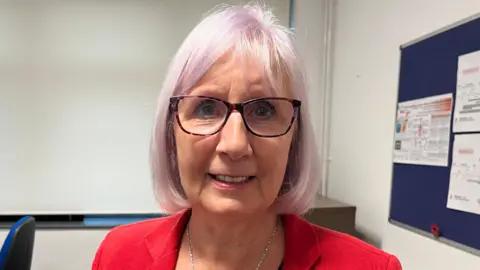
Ms Lilley had her brain tumour removed in 2021 – four years after it was initially missed on an MRI scan.
She spent seven days in hospital having tests after she collapsed at home, landing on the concrete step outside her front door.
Ms Lilley woke up thinking it was 1993.
She said: “I thought I was 41, with young children.
“I couldn’t believe I have five grandchildren.”
“Before my surgery I only had two months left to live,” Ms Lilley said.
“I’d put on three stone in five weeks due to the steroids and I was losing interest in life… I was slowly fading away.”
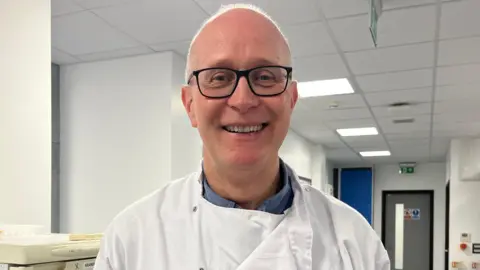
Scientists hope the new funding will provide a more positive outcome for patients.
“This funding is fabulous,” said Professor David Parkinson, the head of neuroscience at the University of Plymouth.
“It will allow us to develop research over the next five years, to take things from the lab into a clinical environment.
“It could really make a difference to patients with brain tumours.”


