Tristan PascoeDorset political reporter
 PA
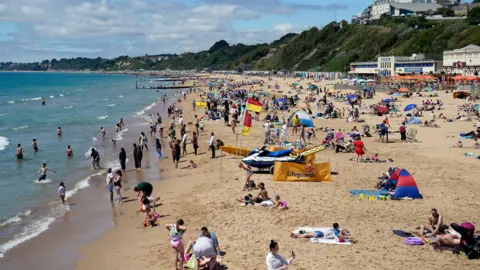
PAA popular coastal resort is missing out on hundreds of thousands of pounds of income from visitors because it cannot introduce a tourism levy, a council leader has said.
Bournemouth, Christchurch and Poole Council (BCP) is calling on the government to allow it to collect a so-called tourist tax.
Liberal Democrat council leader Millie Earl said because the council’s bid to become part of a new mayoral authority was unsuccessful it is not able to introduce the levy, unlike areas with a mayor and said that is “not fair” on the authority.
The Ministry of Housing, Communities and Local Government (MHCLG) said it was considering options for levies and devolution in more areas.
The new levy was announced in the November Budget by Chancellor Rachel Reeves, to enable Strategic Mayoral Authorities to charge visitors for overnight trips in hotels, holiday lets and B&Bs.
The tourism economy is worth millions of pounds a year to the south-west of England and Earl said a levy on the towns’ 10 million annual visitors could be a vital stream of income.
“We’re urging government to extend these powers to local authorities in the same way that mayoral strategic authorities have them,” she said.
“We have the same problems in our tourist economy and we need to be able to address them and this is one way the government can really help councils on the south coast.”

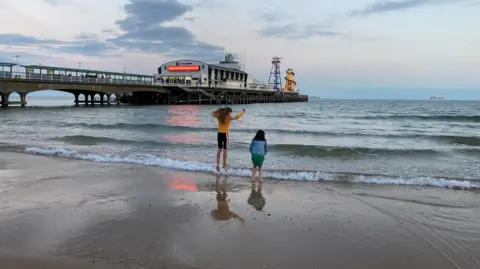
Some hoteliers in Bournemouth opposed the plans, that were put on hold in 2024, saying tourists would “go elsewhere” if they were forced to pay more.
But Earl said the levy would make a difference.
“Councils are under a huge amount of financial pressure but actually a lot of our pressure comes from being able to sustain a tourist economy.
“So if we could get a bit of more money to be able to deal with that, then that puts us in a more sustainable financial position,” she added.
Mayoral elections in other parts of England have been postponed until May 2028, so leaders of the councils that would make up a Heart of Wessex Strategic Authority – BCP, Dorset, Wiltshire and Somerset – have written to the government, urging them to reconsider its bid as soon as possible.
Earl said in the meantime the authority wants the power to begin charging the tourism levy.
She said: “There’s no reason why the government can’t extend these powers. It’s not fair that they will be able to get that additional bit of money to fix those issues, whereas we’ll be left behind.”
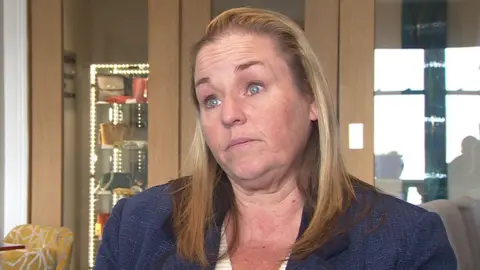
Rosie Radwell, who owns and runs Marsham Court Hotel in Bournemouth, said additional funds could have a huge impact on the future of tourism in the area.
“We can bring more events into the town and festivals and help clean up the place, just make it more appealing,” she said.
“If we were able to charge £2 a night, it could bring near part of £2m a year in, and that kind of money can help us do all sorts of things throughout the year.
“I think for the sake of £2 per night, I don’t think it’s a lot of money to stop them from coming.”
Professor Adam Blake, tourism lecturer at Bournemouth University, told BBC Politics South there are pros and cons.
“Even something like £100,000 or £200,000 of revenue can provide a lot of the cleaning and maintenance services that are needed,” he said.
“It doesn’t have to be big numbers to be beneficial, but tourists may well go elsewhere just because there are taxes.
“It’s not just working in hotels, it’s things like restaurants and shops and it’s supply chains around the wider areas, so there’s an awful lot of jobs and incomes being earned and towns like Bournemouth, Christchurch and Poole really depend on this kind of money coming in.”
In a statement, MHCLG said: “We’re engaging with Wessex councils about more devolution in the region, and will set out next steps in due course.
“We’re also consulting more widely with communities on the design of the power to introduce a visitor levy including which authorities should have this power.”