
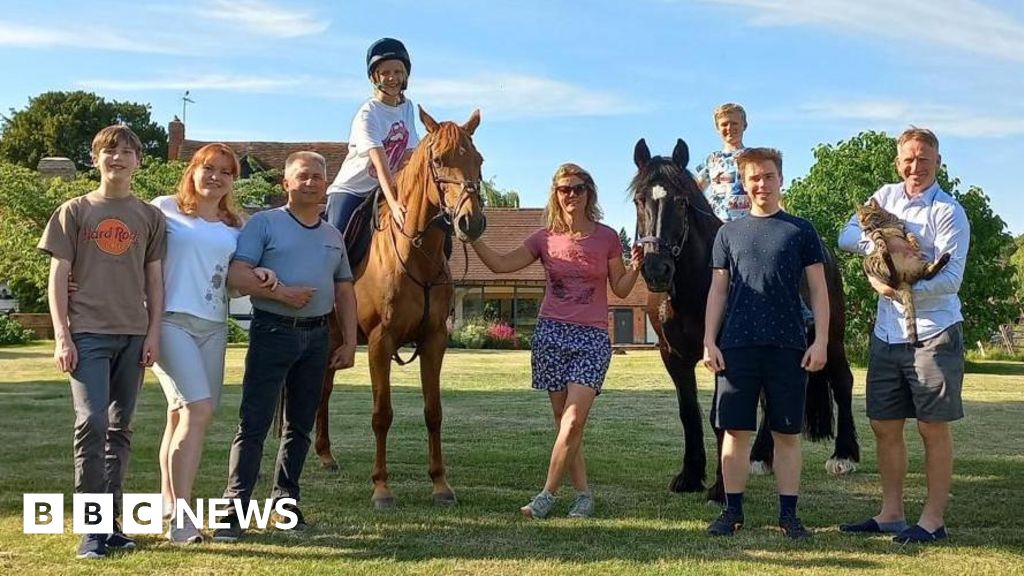
Katharine Da CostaSouth of England
 Steve Vinnicombe
The Ukrainian resettlement scheme saw thousands of people given new homes in the UK and has been praised as a success by both hosts and families fleeing the war-torn county.
Now the government wants to launch a similar community sponsorship programme, so other refugees have a safe and legal means to enter the country.
It is part of home secretary Shabana Mahmood’s sweeping reforms to curb illegal migration, which she says is “tearing our country apart” and dividing communities.
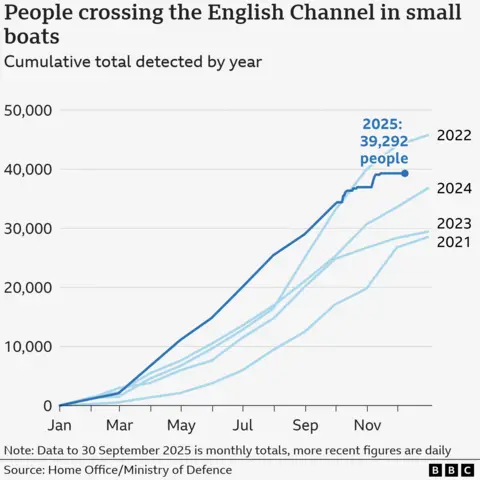
But, with more than 40,000 people risking their lives crossing the English Channel in small boats last year, some have argued it will not be enough.
The resettlement scheme saw 4,797 Ukrainians hosted in Hampshire and the Isle of Wight, according to official figures.
There were also 2,784 in Oxfordshire, 2,599 in Berkshire and 1,873 in Dorset up to the end of September 2025.
Now the government hopes a similar model could help to deter people from making dangerous crossings.
Community sponsorship allows local communities, charities and faith groups to get involved in providing practical support to help refugees settle in the UK.

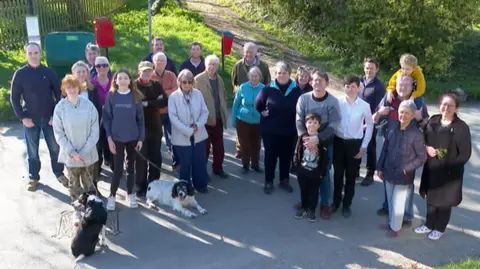
North Moreton, a small, rural village in South Oxfordshire, home to just 350 residents, welcomed more than 50 guests under the Homes for Ukraine scheme.
About 18 hosts provided accommodation, while others helped with transport, cooking and English lessons.
Peter and Polly Vacher, who first proposed their village house Ukrainian refugees, have hosted two separate families since 2022.
“North Moreton has always been a close knit community,” said Mr Vacher. “In this particular case it excelled itself.
“Our general view is it brought the village as much benefit as the Ukrainians got out of it… and it’s held the village together ever since.”
The couple liaised with the local authorities and other services to help the families find school places, dentists, jobs and bus passes.
 Peter Vacher
Seventeen-year-old Alisa, along with her mother and brother, spent four months with the Vachers before returning to their home in Chernihiv, in northern Ukraine, to be with their father.
“When we just arrived I was terrified, I wanted to go back home,” Alisa said.
“I started talking to Polly and Peter and I’m so thankful that every day they asked about our mood, they helped to sign all the documents, going to school was such a good experience and they helped with all of it.”
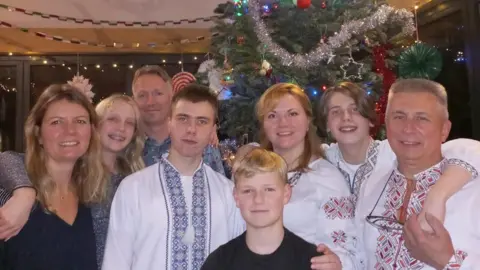
Steve and Helena Vinnicombe were also able to offer a family of four the use of their annex.
Olena and Olexanda Maiboroda and their two teenage sons had to flee their home in Donesk in eastern Ukraine twice, once in 2014 and again in 2022, due to Russian occupation.
 Steve Vinnicombe
Olena, 44, is a skilled seamstress while Olexanda, 65, has found work as a tradesman.
Their son, 16-year-old Andrii, said: “We want to work, we want to get on from what happened and restore what we lost and we just want to start our lives over again.”
There have been some challenges to overcome including a lack of public transport and the language barrier.
But Mr Vinnicombe said those who had chosen to settle in the area had managed to find work and housing and he would be open to welcoming refugees again in the future.
“As long as the criteria being applied is the same, the same willingness to integrate and be economically productive and constructive members of society, it doesn’t matter where someone is coming from, if the need is the same, I think our ability to provide would be,” he added.
Under the new scheme, community groups would have a greater role in identifying and selecting those they welcome into their communities.
The home secretary plans to set an annual cap on arrivals based on local capacity.
But some charities are concerned the numbers could be quite low initially, at just a few hundred, and would be unlikely to ease pressure on housing asylum seekers.
“Safe routes are essential, but they only work when they are properly funded and available on a scale that meets real need,” said Jon Featonby, chief policy analyst at the Refugee Council.
“A community sponsorship route helping only a few hundred people flee war and persecution won’t stop dangerous journeys or create an orderly system.
“If the government truly want to save lives, they need to set out how many people it intends to help each year – and how it will grow safe routes so families have a genuine alternative to perilous journeys.”
Refugees At Home CEO, Lauren Scott, said: “Homes for Ukraine came with the support of the government – financial and otherwise – and this made a tremendous impact on its success.
“Community solutions such as hosting are a safe alternative to asylum accommodation and we welcome any approach that helps refugees and people seeking asylum find their feet and rebuild their lives in the UK.”
The cap on numbers and timescale for sponsorship are still to be decided, however, the existing Community Sponsorship programme is not funded.
A Home Office spokesperson said: “As part of the most sweeping reforms to tackle illegal migration in decades, we are proposing transformative changes to safe and legal routes which will fundamentally reshape how we provide opportunities for refugees.”

