

Clare AinsworthSouth West
A medical student hopes her award-winning invention for detecting a deadly water parasite could save thousands of people from the risk of infection.
Kathryn Thomas, 21, from Berkshire, said the system she had developed for detecting cryptosporidium – parasites that can cause a respiratory and gastrointestinal illness – could make a “huge difference to the health of thousands of adults and children”.
Her idea for the FluoroGlow machine was chosen as runner-up in a UK-wide search for the best student innovation.
Ms Thomas who has just graduated from the University of Exeter in medical science and is studying to be a doctor, said she was inspired to work on her invention after reading about the cryptosporidium outbreak at Brixham in Devon in 2024.
“I was in my final year when I saw a news report about a large outbreak of cryptosporidium in Brixham which was making many people unwell and forcing residents to boil their water,” she explained.
“I began to wonder if there could be a faster, more reliable way to detect cryptosporidium in water.
“I approached the engineering company I had worked for with this idea and they have supported me to develop the fluorometer device.
“By identifying contamination early, FluoroGlow could help prevent outbreaks before they spread and protect families and communities from preventable illness,” Ms Thomas said.
She said her invention was still a prototype but she was working with a Reading-based engineering company Keynes Controls Ltd to calibrate it, get industry approval and take it to the patent stage.
According to the government, there were 5,708 cases of cryptosporidium in the UK in 2024.
Ms Thomas said she hoped thousands more cases could be prevented worldwide if her device was in use.

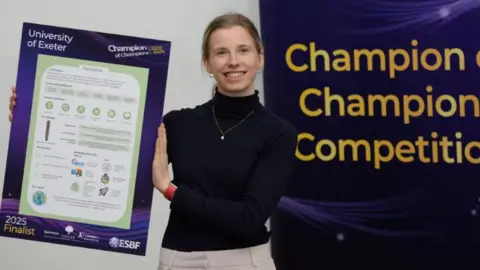 University of Exeter
Ms Thomas first entered her idea for the University of Exeter’s Elevate programme where it qualified for the Engineers and Scientists in Business Fellowship (ESBF) Champions of Champions grand final and took the Big Ideas Runner Up prize.
Amber Strong, Elevate ESBF lead at the University of Exeter, said: “We’re incredibly proud of Kathryn and her groundbreaking work with FluoroGlow.”
Dr Paul Bayton, a scientist at Keynes Control Ltd, said the firm would be supporting Ms Thomas to continue her research into the detection of pathogens in water.
“Kathryn’s knowledge is outstanding and remarkable for a person of such a young age,” he said.


