Dawn Limbu,Bristoland
John Darvall,BBC Radio Bristol
 Chloe Docker
A woman who believes she was spiked is calling for all venues to install lower bar areas to help more people safely order and monitor their own drinks.
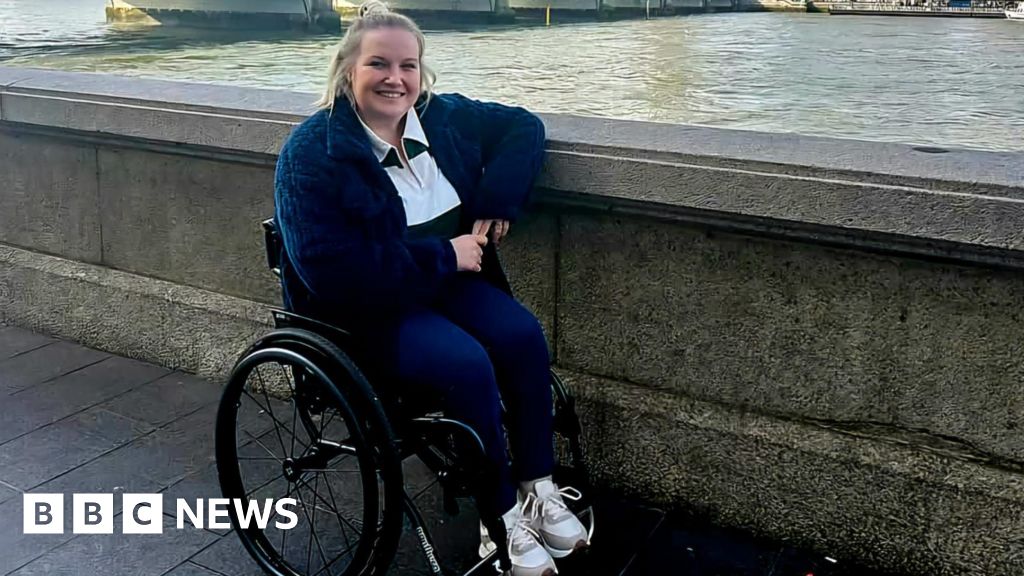
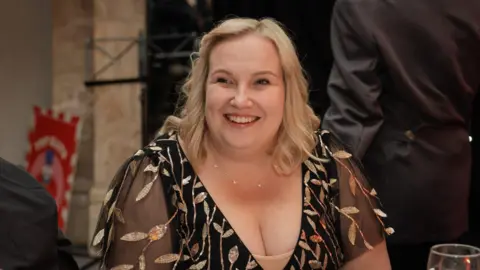
Chloe Docker, who lives with muscular dystrophy and uses a wheelchair, believes her drink was spiked while she attended a private event in August.
She said the usual advice to prevent drink spiking, such as always buying your own drinks and keeping them in sight, was not practical for many disabled people.
Trade body UKhospitality said customers’ safety was a top priority and venues had a legal obligation to make reasonable accessibility adjustments. It said the appropriate changes depended on the venue’s size, layout and operational model.
Chair of the organisation, Kate Nicholls, added that venues “continued to work tirelessly to prevent spiking, including providing education and proper training for staff to spot the signs”.
Mrs Docker, a former BBC employee, was diagnosed with a rare form of muscular dystrophy called nemaline myopathy at the age of four.
The rare genetic condition causes muscular weakness which worsens over time.
In August, she travelled from her home in Weston-super-Mare, North Somerset, to a private event in London.
‘In a panic’
The 29-year-old said she meticulously planned how she would get there and back – including what she would drink.
Mrs Docker said she arrived at the event at 15:30 and last remembered checking her phone at 17:30.
When she regained awareness, it was dark and she was “in a panic” – she now believes she was spiked.
“It was dark. Everybody, not knowing me well, believed I was just drunk,” she said.
A guest phoned Mrs Docker’s husband for her, but she struggled to speak.
Fearing she might be having a stroke, he drove from Weston-super-Mare to collect her.
On the journey home, Mrs Docker said she remained slumped in the car and unable to talk, so her husband took her to hospital for treatment.
The incident was reported to the Metropolitan Police, but by the time a detective was assigned, the bar’s CCTV footage had been wiped and the investigation could not proceed further.

 Chloe Docker
A spokesperson from the force said: “We know this is frustrating for the victim and have continued to update and support her.
“We do recognise the long lasting impact that drink spiking has on those affected and are working closely with venues across the capital to tackle this issue.”
Mrs Docker is now calling for all venues to have better measures for people with accessibility needs, which she believes could reduce the risk of spiking.
“I’d like there for be a lower side of the bar so that people like me can order a drink for themselves,” she said.
“Just knowing that I could get my own drink and keep an eye on it would be a real level of comfort.
“I can’t currently have that as I’m trying to get used to going back out and into those environments,” she added.
 Chloe Docker
Georgina Smerald, policy research manager at the disability charity Sense, agreed making every venue fully accessible was vital to ensure safety.
She said all venues should “work alongside disabled people in their community to make sure they are safe and fully accessible to everyone, regardless of their disability”.
“Sadly, far too many disabled people find it difficult to safely access public spaces and socialise – even though this is a basic right that many other people take for granted,” she added.