
 BBC
BBCPlans for a road safety strategy without limiting passenger numbers for new young drivers are a “huge missed opportunity”, a bereaved mother has said.
Under government proposals, learner drivers in England and Wales could face a minimum learning period of up to six months between sitting their theory and practical tests.
But so-called graduated driving licences, limiting new drivers under the age of 21 from carrying passengers of a similar age for the first six months, are not in the strategy.
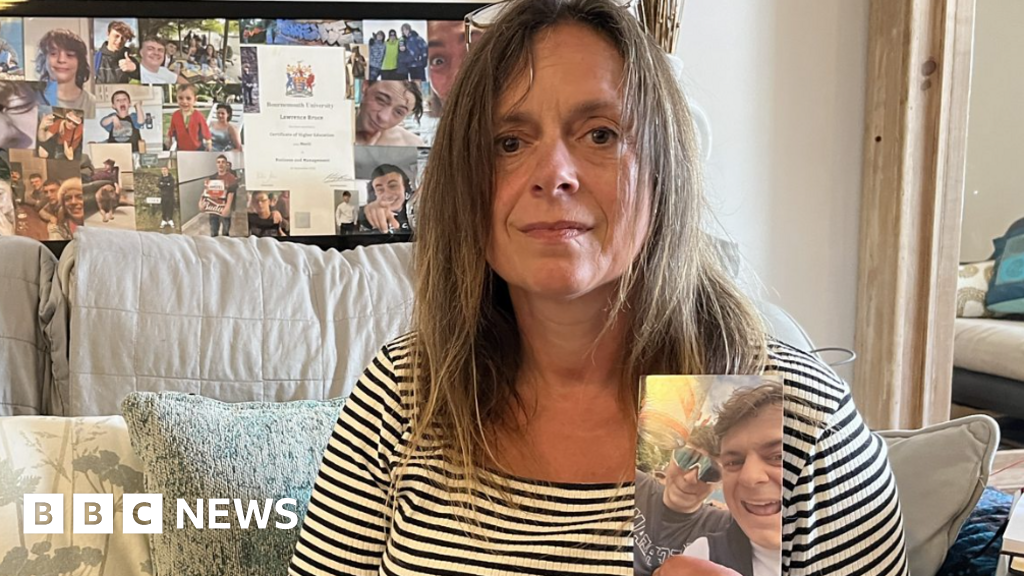
Bridget Lucas, whose son Lawrence Bruce was 22 and a student in Bournemouth, Dorset, when he was killed in a crash said she was “not going to give up” on her campaign for tighter rules for young drivers.
The shake-up of driving laws is aimed at reducing the number of people killed or badly injured on the roads by 65% over the next decade and by 70% for children under 16.
A fifth of all deaths or serious injuries from crashes involved a young car driver in 2024, according to official figures.
The government believes a minimum period between sitting the theory test and the practical test would help learner drivers develop their skills, including driving in different conditions.
It would also include any informal learning they may do with parents or guardians as well as formal lessons with a driving instructor.
Lucas, from Cricklade in Wiltshire, has been among those campaigning for “graduated driving licences” (GDLs), various types of which are used in other countries including Canada, Australia and New Zealand.
They impose limits on new drivers, such as the numbers of people allowed to accompany them and the time of day they are allowed on the road.
Her son was a student at Bournemouth University at the time of his death.
Lawrence Bruce was returning from a music event in Oxfordshire when the car he was in crashed on the A420 in August 2022. He died at the scene, along with a fellow passenger and the car’s driver, who were both 18.
She said: “I’m not convinced that the measures that they’re talking about today will meet those [targets] – especially if we break that down into the the younger demographic.
“So I think it’s a huge missed opportunity and I’m not clear the reasons why they’re not considering peer-aged passengers being excluded for a short period.”
“A driver needs to really hone their skills once they’ve passed their test and to do that without the distractions of peers and a car full of young people is the best way of achieving that safely.
“In Lawrence’s name, I’m not going to give up on this,” she added.

 Sam Robinson
Sam Robinson from Farnborough in Hampshire, another mother of a teenage road crash victim, also called for the introduction of graduated driving licences.
Her son Billy, 17, was one of eight people in a VW Polo in Tongham, Surrey, when it veered on to the wrong side of the road, hitting a taxi coming in the opposite direction: “I just don’t think we do enough and every single day and every single week we’re losing young people on our roads. The accident that Billy was involved in was preventable.
“So I think any new road safety strategies coming in is a positive step forward.”
Rob Heard, a retired Hampshire Road Police traffic officer and road safety consultant, said the government’s proposals were a “stepping stone”.
“Yes it’s good we’re allowing more time to educate themselves, but we do need further regulation to keep those young drivers in check for the first few years.”
The government has said the strategy would “help save thousands of lives”.
Local transport minister Lilian Greenwood said the proposed learning period “is all about supporting young drivers to develop the confidence they need to stay safe and giving them more time to build their skills and gain experience in different driving conditions”.
The strategy is subject to consultation after being launched on Wednesday.

