
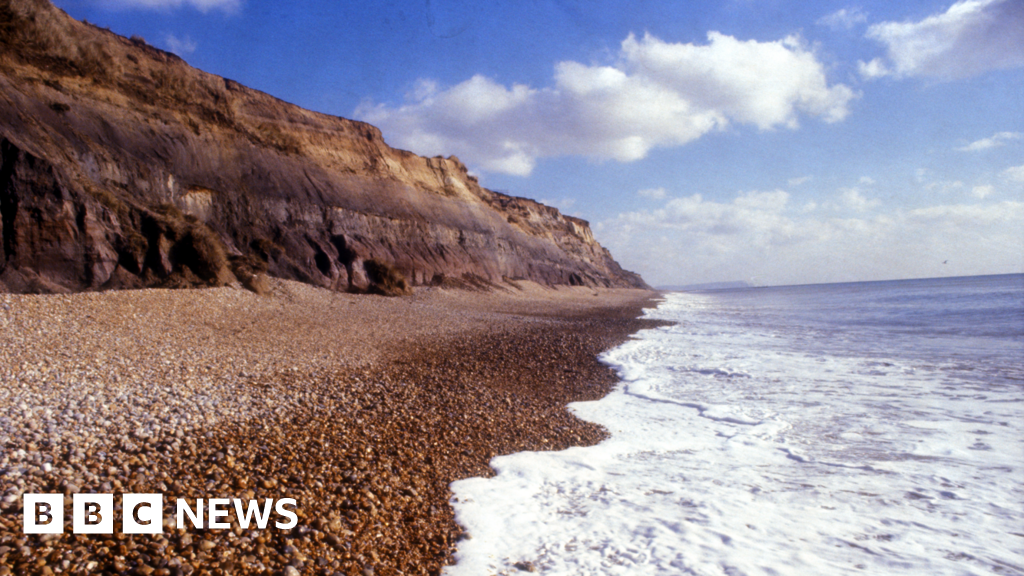
Two seaside councils have adopted a new joint action plan to manage coastal flooding and erosion risks for the next 100 years.
Bournemouth, Christchurch and Poole Council (BCP) and New Forest District Council worked with the Environment Agency and infrastructure consulting firm Aecom to produce the Christchurch Bay and Harbour Strategy.
It outlines how ageing coastal defences and the changing climate, including rising sea levels, put more than 3,500 properties at risk.
The authorities said that if nothing was done, over the next 100 years, the coastal frontage would suffer about £1bn in damages.
The strategy will apply to the stretch of coastline from Hengistbury Head Long Groyne in Dorset to Hurst Spit in Hampshire.
In recent years, the area has seen cliff slips at West Cliff and East Cliff and coastal erosion caused a section of Hurst Castle’s east wing to collapse into the sea in Lymington in February 2021.
Andy Hadley, BCP’s climate response, environment and energy lead, said it was the “first time a cohesive strategy has been adopted for this stretch of coastline”.
He added: “The value of damages is not designed to alarm people but enables us to evidence and justify available options to ‘do something’ to minimise the risks to people, properties, infrastructure and open spaces.”
Geoffrey Blunden, environment and sustainability lead at New Forest District Council, said the plan recommended three “flexible” options for each area.
A national economic option, a local aspirational option – developed using public views and which “tends to be the costliest to deliver” – and a back-up option “if funding cannot be secured”, he said.
Mr Blunden added: “By working together to manage the risks, we intend to ensure that future generations will be able to continue to enjoy the coastline.”

