

Matthew HillHealth Correspondent, West of England
 BBC
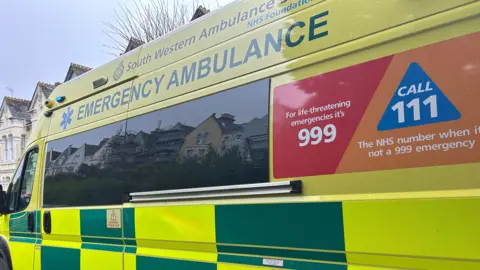
BBCThe ambulance service currently rated as the worst in the country by the NHS for overall performance faced the busiest day in its history earlier in January.
South Western Ambulance Service NHS Foundation Trust (SWAST) said that day – which topped days during the Covid-19 pandemic – came on 1 January when it responded to 3,796 incidents.
Despite a significant improvement in emergency call out times, it added it has been in the highest state of alert continuously for weeks.
SWAST’s CEO John Martin said there has been a “big improvement” in emergency responses through working with hospitals, health and social care teams and the public, by raising awareness about when it is right to call 999.
Ambulance services across the country are rated regularly by the NHS Oversight Framework on things like access to services, patient safety, effectiveness and experience and workforce.
SWAST has the biggest geographical area of the country to serve, including remote parts of Somerset, Wiltshire, Gloucestershire, Devon, Cornwall and Dorset.
In December it was rated as the worst out of the 10 ambulance services.
In that month, the service dealt with 102,478 incidents across the South West.
Martin said in response to the figures: “We’ve been working very hard on our access figures.”
He added that the data released in December was looking at the summer months and believes that things have been “much improved” since then.
He added his trust scores very well for the quality of care provided by clinicians.

In the summer of 2024, Graham Whiteley was found barely conscious and bleeding with head injuries by a member of the public.
He had walked out of Hummingbirds Care home in Churchingford, on the Blackdown Hills, in Somerset, after a visitor had momentarily left doors unlocked.
The initial 999 call was graded as category two, which meant an ambulance should arrive within 18 minutes.
‘A traumatic time’
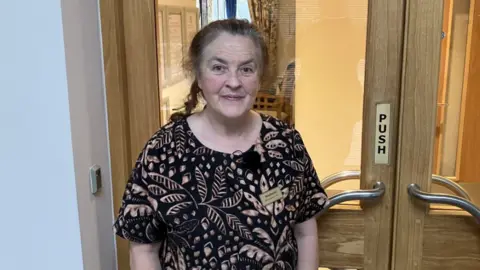
It was later downgraded, but the care home owner Stephanie Westlake said she had to tend to Whiteley for two hours before an ambulance finally arrived.
He was taken to hospital, but later died from pneumonia.
“We were expecting them to be fairly quick,” Westlake said.
“Two hours later, nobody had arrived…it was a traumatic time for family and staff.”
She added she understood there had been backlog of people the ambulance service had to see that day.
“Everyone works really hard with the ambulance service, but it’s once they get to the hospital and they can’t hand people over, I think that was a big thing and I think that was mentioned in the coroner’s report,” said Westlake.
The coroner at the inquest into Whiteley’s death sent a report to SWAST warning of a risk that future deaths will occur unless action is taken.
In a letter sent to the coroner in March last year, SWAST said its thoughts were with Whiteley’s family, and it was “working to combat and reduce handover delays”.
It added this was “a key priority to improve access to our services and to reduce harm to patients waiting in the community for an ambulance response”.
Since then category two call outs have improved, with average waits falling to 32 minutes from one hour in 2024, despite record demand.
Data gathered by the BBC also shows an improvement in category 1 call outs – which are meant to be attended in seven mins or under – but it is still almost two minutes longer than it should be.
In 2019 the service recorded an average time of seven minutes and 8 seconds, but this increased every year up to, and including, 2022 when it was 13 mins 11 seconds.
Last year the figure had dropped back down to eight minutes and 54 seconds.
SWAST said it has also managed to meet the 45-minute target to discharge patients into hospitals since October.
That is despite Bath’s main hospital – the Royal United Hospital [RUH] – recording more than 820 hours of ambulance delays in one month – among the worst in the South West.
A RUH spokesperson said: “Over the last six months, our data shows that we have made very significant inroads to improving handover delays and we always prioritise patients with the greatest clinical need.
“However, we are sorry that some people will still experience greater than average waits.”
‘Tough winter’
SWAST CEO Martin confirmed the service had been at its highest state of alert – known as Resource Escalation Action Plan (REAP) – since November.
This means there is less staff training so that more are available to respond to patients, as well as call handling.
Martin said it has been a “tough winter” .
Despite this, he said: “We were much better than we were the previous year. We have seen an improvement in category one and two response times.
“Since the New Year it’s been busy. We’ve responded to that well working with our partners, and as we go through these next few weeks we would hope to see that continues to improve.”


