 BBC
BBCAnimal rescue centres have said 2025 has left them poorer and less able to help people who can no longer look after their pets.
Shelters in Bristol and Somerset told BBC West that demand for their services has never been higher, while many are finding it more and more difficult to fund their current operations.
Ferne Animal Sanctuary near Chard, Somerset, issued several redundancies in 2024 in order to future-proof itself going forward, but despite that, it says costs have increased further in 2025 and some of the savings made had since been eroded.
“In one year, our core operating costs have increased by about 15%,” said Emma Purnell, the charity’s CEO.
“Just utilities alone have gone up by 20%, so we really feel it.
“We’ve seen a sharp rise in the number of animals looking to be rehomed and we’ve seen an increase in the number of people having to surrender because they can’t afford to look after their pets anymore.”

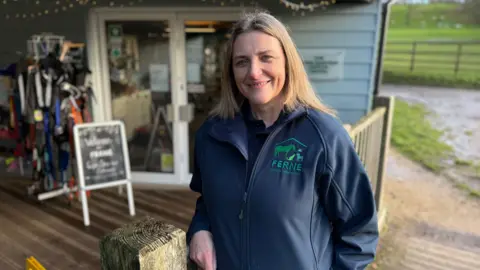
The charity receives frequent calls from dog pounds, asking if they can take animals off their hands immediately.
Almost always at capacity, the charity often has to turn down the requests.
“We currently have a waiting list for every species we hold, 107 dogs on our waiting list, 72 cats, 43 horses, and we’ve only got so much space and so much resources, ” said Nikki Haddock, the charity’s animal care manager.
“Competition for income is really fierce and the economy has changed a lot and people have less disposable income.”
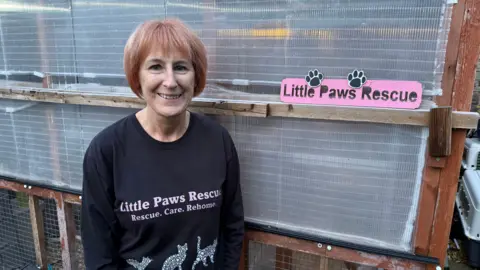
The feelings are echoed by Tracey Bryant, owner of Little Paws, a charity based in Clevedon, North Somerset, which takes in and rehomes cats.
“Every year is getting harder and harder and harder,” she said.
“The numbers are a lot higher and the cost for each [animal] is a lot higher.
“There’s a misconception that vet treatment is free for rescues.
“We’re also seeing a large increase in cats not being neutered and vet bills that are going up very quickly, which means more cost for us.”
Some shelters, like Little Paws and Bristol Animal Rescue Centre (BARC), are asking people to foster animals that would otherwise be in their care, because it means they have room to look after more pets.
BARC provides food, bedding and bears the brunt of medical costs for the animal, but keeps a space free in its shelter for pets that need more stringent care.
This has proved essential in a year where more animals have been brought to the charity than ever before.
Erin Stow, individual giving officer at BARC, said: “29% of our admissions come from people making the organising decision to part with their beloved pets due to the rising cost of living, behavioural changes or personal crisis.
“These pressures have contributed to a record-breaking year, with almost 950 animals expected to enter our care.”