
Stephen StaffordSouth of England
 BBC
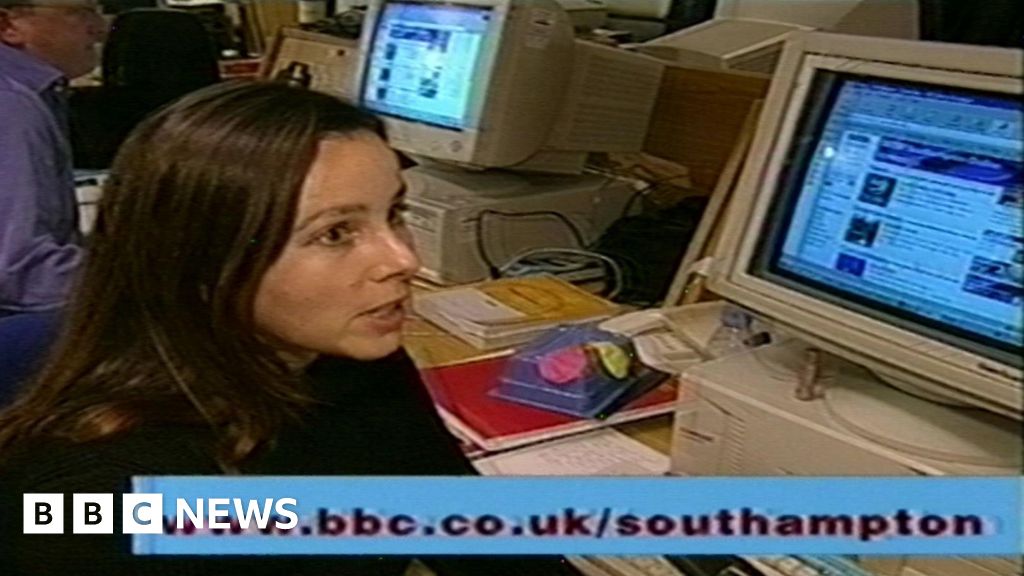
BBCIt was December 2000 – the world had survived the Millennium Bug and the Information Superhighway was heading at dial-up speed into the future.
The BBC had launched its online service on bbc.co.uk three years earlier and the south of England was now among the first regions to launch a local presence on the world wide web.
BBC Southampton Online began as a city-focussed website, later followed by sites for Berkshire, Oxfordshire and Dorset.
It marked the start of a digital journey that has revolutionised how local news, sport and information has been consumed in the region.
Where you live
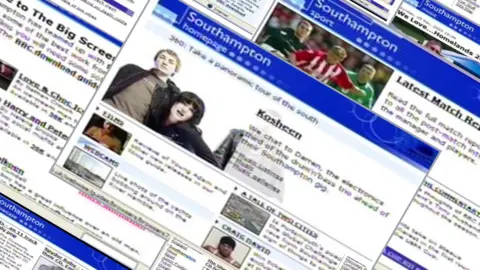
Among the most popular early innovations was a feed of Southampton’s traffic monitoring webcams.
Low grade images of the city’s road junctions which updated once every five minutes may not have made gripping viewing, but in the days before satnavs and traffic apps, they proved remarkably popular with people checking for jams before they left work.
The style and look of the pages as they were technically constructed may look a bit quaint to web users two decades later, but their content is a snapshot of culture, music, fashion, news and sport in the early noughties.
Users could enter competitions and online quizzes were created about any and every subject locally – dolphins, UFOs, cats and Southampton’s RnB superstar of the time, Craig David.
The new websites also added a level of interactivity with the audience.
Early webchats included two New Forest witches answering users’ Halloween questions and the then-last Doctor Who, Sylvester McCoy.
The Big Screen section gave a platform to local student film makers’ creativity before video sharing platforms like YouTube took off.

Editor at the time, Tim Burke recalled: “We were the Wild West of local online for the BBC. We did everything we could to try to get people engaged and clicking on pages.
“Some of it frivolous, some of it worthy, but always with an eye on trying to provide something which was Reithian – informing, educating, entertaining.
“It was a great experiment in real time interaction with audiences, which developed and got more sophisticated. It was a privilege to be in a team of those pioneers.”
With BBC iPlayer still several years away, users could watch the evening regional news – albeit on a window not much bigger than the size of a postage stamp, using early versions of RealPlayer.
To put that in context – a 60Mbps modern fibre broadband connection is about 1,000 times faster than a 56k dial-up connection.
Aiming at a younger demographic than BBC regional TV and radio traditionally appealed to, the sites showcased the local music scene and festivals including the newly-revived Isle of Wight festival in 2002.
Coverage of local bands, including interviews and gig reviews, evolved into local music shows on the radio, with online reporters often finding themselves in the role of presenters.
One of the earliest such shows was The Download, which debuted on BBC Radio Oxford in March 2005 with the aim of showcasing unsigned music in the area.
Along with other fledgling new music programmes, they were eventually brought under the BBC Introducing brand.
Streaming ahead

As the web started to mature with new technologies and formats, the BBC began to develop new ways of presenting content.
In 2008, not only was the emotional departure from Southampton broadcast live on television and radio, it was also streamed online and watched by QE2 enthusiasts around the world.
The coverage incorporated tweets from passengers on board using the recently-launched Twitter social media platform.
Sporting highlights included when Southampton reached the FA Cup Final in 2003.
The famous trophy was brought into Broadcasting House, with fans queuing in the street for hours to have their photo taken and shown in the BBC website gallery.
Five years later, it was south coast rivals Portsmouth who made it to the final.
Up to 200,000 people lined the streets of Portsmouth to welcome home their cup- winning team after Harry Redknapp’s side beat Cardiff 1-0 at Wembley.
Digital video
Lockdown and beyond
As digital coverage entered its third decade, regional news faced its biggest challenge and the biggest demands for information from the audience.
The news pages carried heart-breaking stories from local families who had lost loved ones to the Covid-19 pandemic, as well as covering the impact on workplaces, schools and transport as everyday life was put on hold.
The development of live pages has allowed rolling online coverage of big, breaking breaking stories.
As winter storms have battered the south coast, users have been able to follow developments on scrolling pages, constantly updated with forecasts, warnings and reports on the effects close to home.
The 2020s have seen a number of high-profile stories covered online – the theft of a gold toilet from Blenheim Palace, the tragic fire at Bicester Motion and the drowning of two young people off Bournemouth beach.
Current digital editor of BBC South, Dan Kerins, said: “It can hard to realise how much things have changed since the turn of the millennium.
“There have been huge changes, not least in how much more important digital platforms are for news and sport and it will be fascinating to see how things develop in the decades to come.”
While users 25 years ago had to log in on desktop computers with slow internet connections, or use their televisions to find Ceefax page 160, the majority of news content is now viewed on mobile devices and the BBC News app.
With the app offering local news stories, insight and analysis straight to phones and tablets, the local lanes of the information superhighway are only getting faster.

